
What is Pixel Shift? And What Does it Mean For the Highest Megapixel Camera?
In machine vision, capturing every detail matters. As industries constantly push for greater precision, engineers must rely on ultra-high resolution cameras to keep throughput up, while keeping complexity and costs down. To keep up with the ever increasing demands, developers have turned to pixel shift technology- a key innovation used to significantly increase a camera’s […]
Is Thermal Noise Interfering With Your Image Quality?
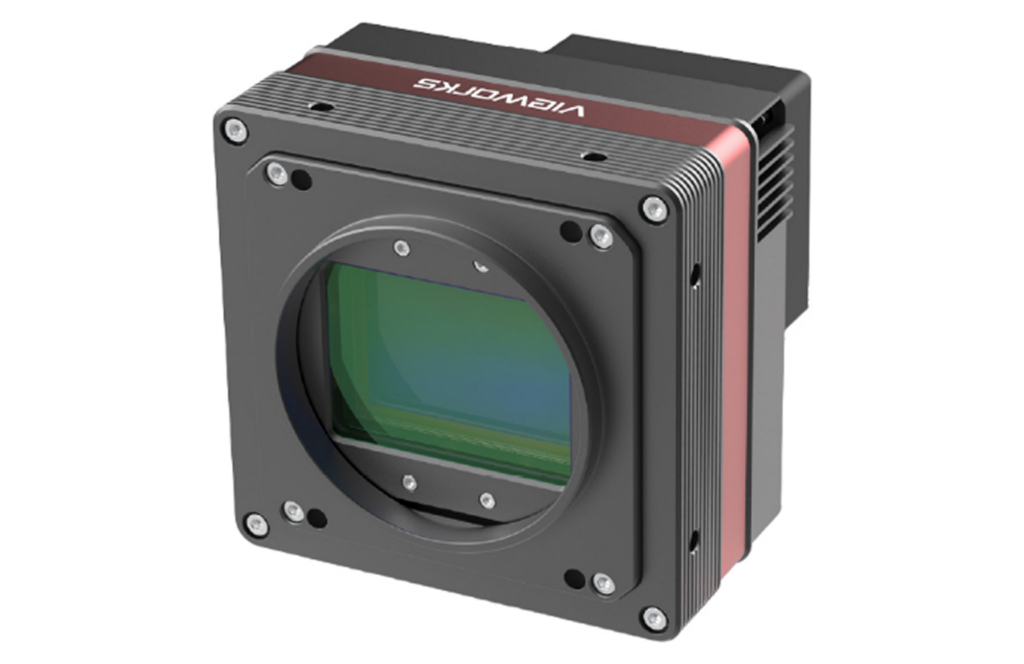
How Thermoelectric Peltier Cooling Technology Revolutionizes Machine Vision Imaging Vieworks integrates advanced Thermoelectric Peltier (TEC) cooling technology in their VP Series cameras (ranging from 25 MP to 288 MP) to minimize thermal noise while still maintaining peak performance and preventing overheating. The TEC system lowers the image sensor’s temperature by up to 10 °C below […]
Sony’s New IMX811 Sensor: What It Is and Why It Matters
Sony has announced the IMX811-AAMR, a cutting-edge rolling shutter CMOS image sensor designed to push the boundaries of high-resolution imaging. With a diagonal of 64.84 mm and a square pixel layout, this image sensor delivers a staggering 247 megapixels (with a pixel size of 2.81 um), with an effective resolution of 19,200 x 12,800 pixels, […]
What is CoaXPress-over-Fiber and What Does It Mean for Machine Vision?
CoaXPress-over-Fiber (CoF) is an extension of the existing CoaXPress (CXP) interface standard, built into version 2.1, that allows the CoaXPress protocol to run unmodified over fiber-optic connections, rather than traditional copper coaxial cables. It leverages standard Ethernet physical layers, such as SFP+/QSFP+ optics, but continues using the CoaXPress communication protocol. Why CoF revolutionizes machine vision: […]
Meet the Highest Resolution Machine Vision Camera- The VP-288MX2
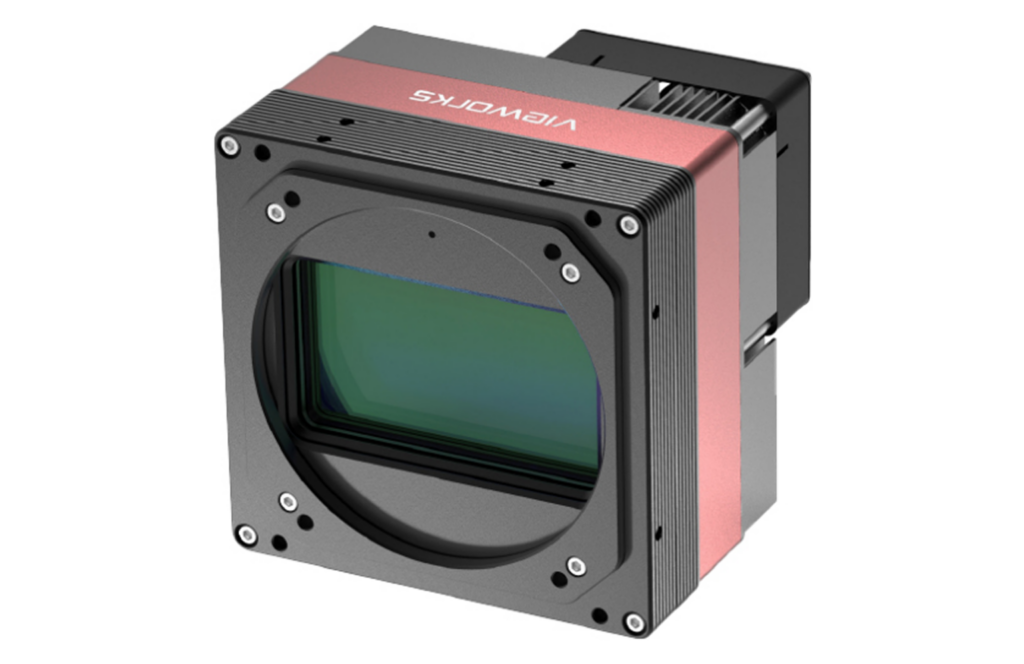
High Performance Area Scan Camera with Thermoelectric Cooling Technology The VP-288MX2 is an advanced 288-megapixel camera featuring the cutting-edge Syncron high-speed global shutter CMOS image sensor. With a resolution of 24,000 x 12,000 pixels and a capture rate of 15 frames per second, this camera delivers exceptional detail, making it ideal for applications like industrial […]
Vieworks VT Sense Series Back Side Illuminated TDI Line Scan Cameras
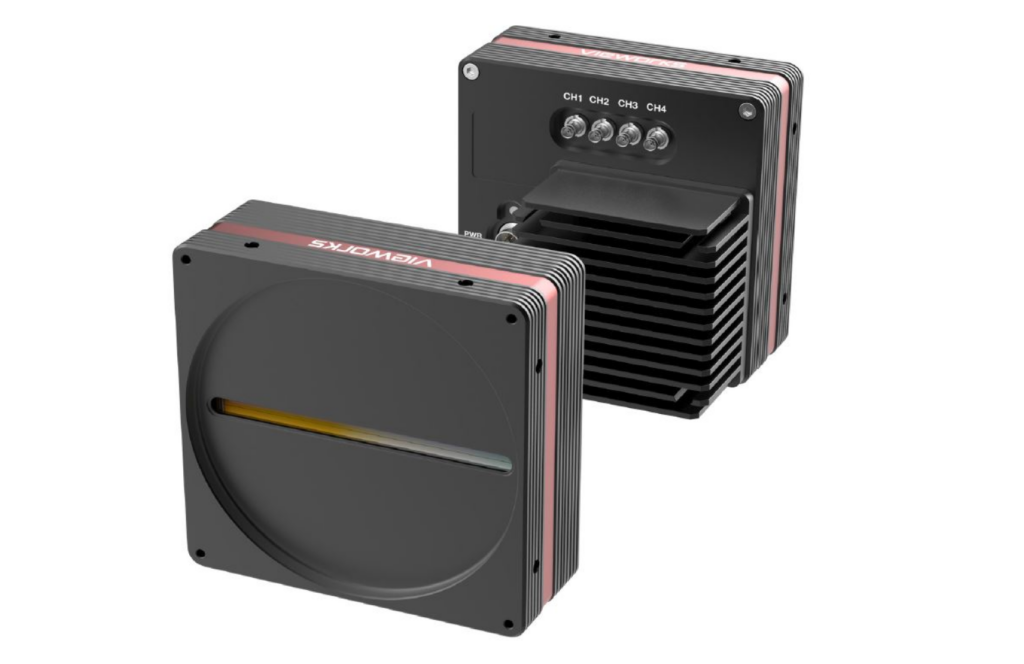
The VT Sense Series (VTS) utilizes BSI (back-side illuminated) technology, resulting in enhanced quantum efficiency (QE) and signal-to-noise ratio (SNR). BSI sensors allow for greater sensitivity and ensure superior image quality in visible, UV, and NIR imaging. With exceptional sensitivity, VTS series demonstrates excellent performance in low-light environments. The series also incorporates advanced TDI (Time […]
WHAT IS PIXEL SHIFT TECHNOLOGY?
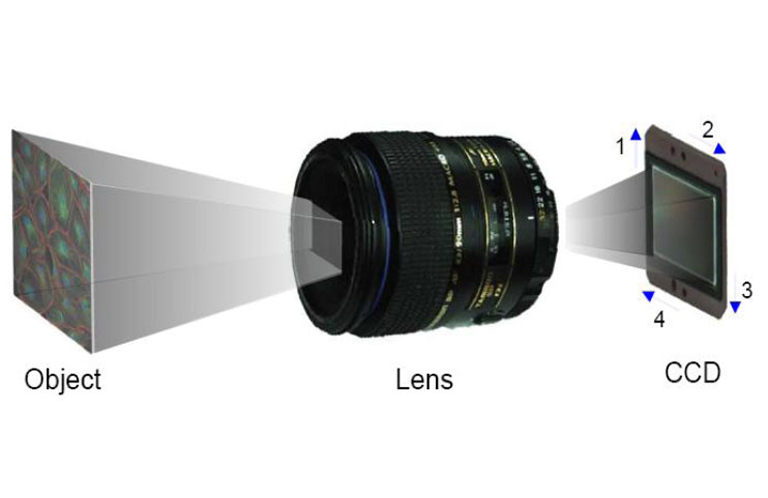
WHAT IS PIXEL SHIFTING? As industrial imaging applications such as automated optical inspection (AOI) and document scanning demand greater precision, higher throughput, and lower build costs, developers must rely upon Ultra-High Resolution cameras to reduce the complexity and cost of deploying these systems. Pixel shifting is a key technology that’s being used to significantly expand […]
WHAT ARE THE BENEFITS OF PIXEL SHIFT TECHNOLOGY?
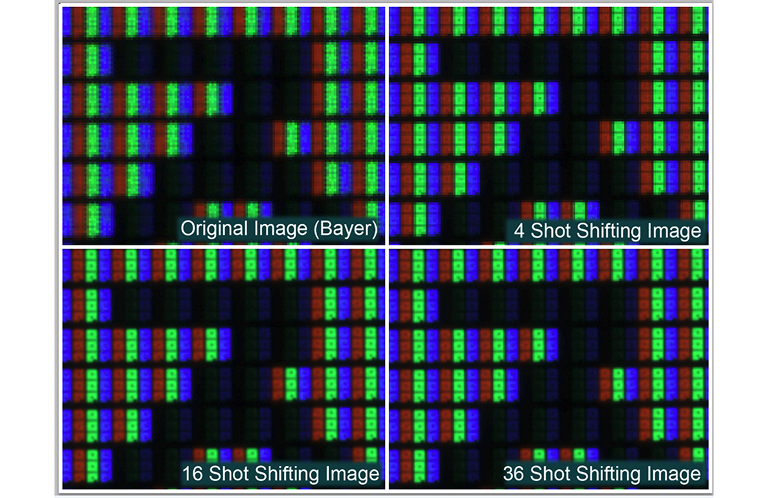
Pixel Shift Technology is used to significantly extend an industrial camera’s resolution beyond that of its native resolution by nano-shifting the sensor a fraction of a pixel or what is commonly called subpixel rendering. A full resolution image is captured and saved for each shift. Moving the sensor by a 1/2 pixel increment produces four […]
CREATING COLOR WITH A BAYER CFA (COLOR FILTER ARRAY)

Vieworks Industrial Vision Color Cameras (i.e. VA-29MG2-C2 ) have image sensors with photosensititve sites called pixels. The pixels are exposed to light where light is converted into an electrical signal. The electrical signal is digitized and stored as an image captured. Silicon is responsive to light from the near UV (below 400 nm) to the near […]
HOW DOES IMAGE SENSOR SIZE RELATE TO OPTICAL FORMAT?

IMAGE CIRCLE CALCULATION| HOW TO CALCULATE AN IMAGE CIRCLE FOR A LENS Optical Format is a photonics term that is a carryover from the days when video cameras where using Vidicon tubes. You many have heard references to lens format as 1/4, 1/3, 1/2, 2/3, 1, and 4/3-inch format. The description is defined in inches. The Optical […]